



Google is making rapid progress in a new computing technology that could eventually impact Bitcoin. What this really means—and why I’m still convinced that Bitcoin has the answer.
What is a quantum computer, anyway?
Normal computers—like your home PC or smartphone—operate using zeros and ones. A quantum computer, however, follows entirely different physical principles and can solve certain mathematical problems vastly faster. Not just “twice as fast,” but on a completely different scale.
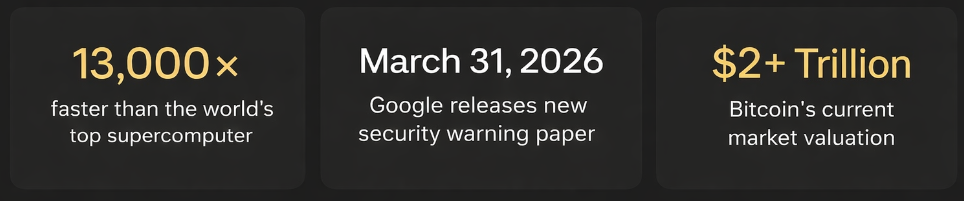
That’s exactly what Google demonstrated in October 2025: using its new “Willow” chip and an algorithm called “Quantum Echoes,” a computational task was solved roughly 13,000 times faster than by the world’s most powerful classical supercomputer. This marks a true milestone—and it has caught the attention of experts across the field.
What does this have to do with Bitcoin?
Bitcoin addresses are protected by mathematics—similar to an extremely secure lock. Anyone who owns Bitcoin has a secret “key” that allows them to spend their coins. This private key cannot be derived from the public address using classical computers—it would take longer than the age of the universe.
Quantum computers could one day break this lock—but only under a specific condition: they would need access to the public key. And this is the crucial distinction that many reports get wrong.
| Which Bitcoin addresses are affected? Only Taproot addresses (recognizable by the “bc1p” prefix) store the public key permanently visible on the blockchain. For these addresses, a future quantum attack would be theoretically possible. All other address formats reveal the public key only briefly during a transaction—and only when funds are actually being sent. Since Bitcoin produces a new block roughly every ten minutes, an attacker would have at most about nine minutes to act. With today’s or foreseeable quantum computers, this is simply not feasible. Anyone who stores their Bitcoin securely using a modern address format is very well protected today. |
On March 31, 2026, Google’s research team published another paper showing that a future quantum computer could attack the cryptography behind Bitcoin with less computational power than previously assumed. No such computer exists today—but the direction is clear, and the Bitcoin community is taking it seriously.
“The Q-Day—the day when quantum computers truly become dangerous—is not coming tomorrow. But those who wait until it arrives have already waited too long.”
Bitcoin is pure money—and that is its strength.
Bitcoin is the hardest, most neutral form of money humanity has ever created. No government can debase it, no bank can freeze it, and no company controls it. It is simple and clear: digital cash. Not digital clutter like Ethereum—a system influenced by a company and subject to change at any time, whether users want it or not.
That’s exactly what I value about Bitcoin—and exactly what I want to preserve. That’s why I actively support Bitcoin Knots, an alternative Bitcoin implementation that is firmly committed to keeping Bitcoin as pure money. No spam on the blockchain, no unrelated tokens, no distractions. Bitcoin should be money—and nothing else.
In this spirit, Bitcoin developers are also working on protocol improvements aimed at making Bitcoin quantum-resistant in the long term—without changing its nature as simple, robust money.
Bitcoin can adapt—and it will.
Bitcoin has already proven multiple times throughout its history that it can evolve when necessary. Today, there are concrete proposals for how Bitcoin can become quantum-resistant. The most important one carries the rather plain name BIP-360. The idea behind it is simple: the public key would no longer be stored on the blockchain at all—leaving quantum computers with no attack surface.
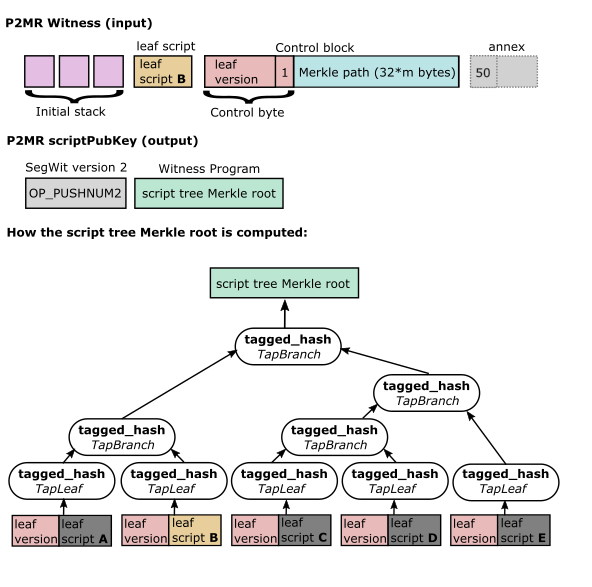
In March 2026, this solution was successfully tested for the first time on a test network. It’s not a finished product yet, but it’s a real first step. In addition, there are new signature schemes that cannot be broken even by quantum computers—these standards were officially certified by the U.S. agency NIST in 2024.
Yes, such changes take time. In Bitcoin, there is no CEO or board making decisions—changes must be supported by the entire community. That can be slow at times. But it also means that no one can simply bend Bitcoin to their will. That’s not a flaw—it’s by design.
What does this mean in practice?
In the short term, there is no reason to panic. The quantum computers that could truly threaten Bitcoin do not exist today—and according to most experts, they are unlikely to exist in the coming years.
In the medium term, a few simple precautions apply. Taproot addresses (starting with “bc1p”) should not be used as permanent receiving addresses. Anyone still using older wallet formats should switch to SegWit—the modern, secure standard. And most importantly: Bitcoin should never be left with custodians, exchanges, or platforms. Those who truly own Bitcoin store it themselves—using their own hardware wallet. Only those who hold their own keys truly hold Bitcoin.
| Understand Bitcoin, secure it properly, and use it strategically I advise private individuals and businesses on Bitcoin—clearly explained, independent, and with genuine conviction. For individual investors: How can Bitcoin be stored securely? Which wallet fits your situation? How do you stay calm when the headlines get loud? For businesses: How do you accept Bitcoin as a payment method? How do you position yourself as a Bitcoin-friendly provider for your customers? |
Conclusion: Bitcoin will stand the test
Quantum computers are a real technological development—not a fantasy, but not an immediate threat either. Bitcoin has time to adapt. It has a global community of dedicated developers, clear values, and a core that cannot be bent.
I’ve been convinced for years: Bitcoin is the best form of money we have. Because it is honest and mathematically limited to 21 million units—making it the hardest money in the world. And hard, honest money always prevails—even against quantum computers.